Tuesday, 31 March 2020

Saturday, 2 January 2016
Santalum album
 Santalum album or Indian sandalwood is a small tropical tree, and is the most commonly known source of sandalwood. This species has historically been cultivated, processed and traded since ancient times. Certain cultures place great significance on its fragrant and medicinal qualities. The high value of the species has caused its past exploitation, to the point where the wild population is vulnerable to extinction. Indian sandalwood still commands high prices for its essential oil, but due to lack of sizable trees it is no longer used for fine woodworking as before. The plant is widely cultivated and long lived, although harvest is viable after 40 years
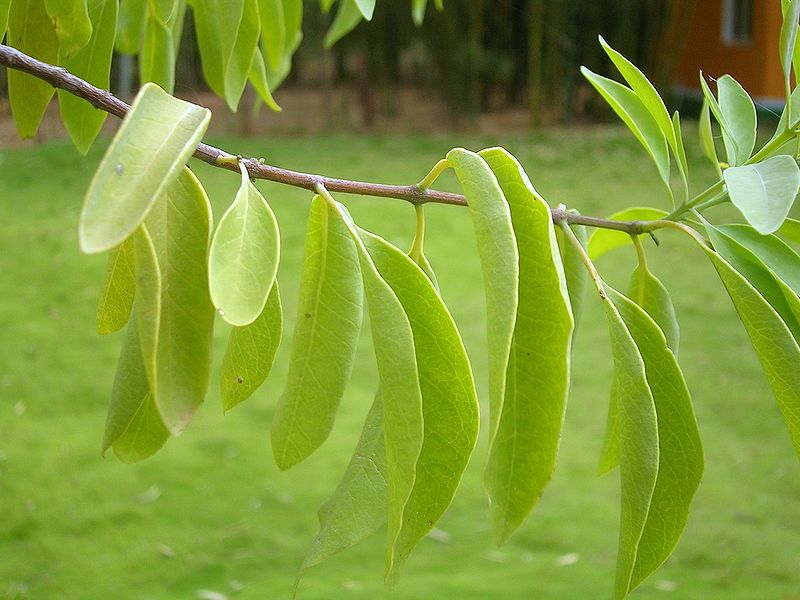
The height of the evergreen tree is between 4 and 9 metres. They may live to one hundred years of age. The tree is variable in habit, usually upright to sprawling, and may intertwine with other species. The plant parasitises the roots of other tree species, with a haustorium adaptation on its own roots, but without major detriment to its hosts. An individual will form a non-obligaterelationship with a number of other plants. Up to 300 species (including its own) can host the tree's development - supplying macronutrients phosphorus, nitrogen and potassium, and shade - especially during early phases of development. It may propagate itself through wood suckeringduring its early development, establishing small stands. The reddish or brown bark can be almost black and is smooth in young trees, becoming cracked with a red reveal. The heartwood is pale green to white as the common name indicates. The leaves are thin, opposite and ovate to lanceolate in shape. Glabrous surface is shiny and bright green, with a glaucous pale reverse. Fruit is produced after three years, viable seeds after five. These seeds are distributed by birds.
Distribution It is a hemiparasitic tree, native to semi-arid areas of the Indian subcontinent It is now planted in India, China, Sri Lanka, Indonesia, Malaysia, the Philippines and Northern Australia.
Habitat
S. album occurs from coastal dry forests up to 700 m elevation. It normally grows in sandy or stony red soils, but a wide range of soil types are inhabited. This habitat has a temperature range from 0 to 38 °C and annual rainfall between 500 and 3000 mm.
Conservation
The species is threatened by over-exploitation and degradation to habitat through altered land use; fire, agriculture and land-clearing are the factors of most concern. To preserve this vulnerable resource from over-exploitation, legislation protects the species, and cultivation is researched and developed.
The Indian government has placed a ban on the export of the timber.
Uses
S. album has been the primary source of sandalwood and the derived oil. These often hold an important place within the societies of its naturalised distribution range. The high value of the plant has led to attempts at cultivation, this has increased the distribution range of the plant. The ISO Standard for the accepted characteristics of this essential oil is ISO 3518:2002. HPTLC and GC, GC-MS based methods are used for qualitative and quantitative analyses of the volatile essential oil constituents. The long maturation period and difficulty in cultivation have been restrictive to extensive planting within the range. Harvest of the tree involves several curing and processing stages, also adding to the commercial value. These wood and oil have high demand and are an important trade item in the regions of:
Sandalwood oil has been widely used in folk medicine for treatment of common colds, bronchitis, skin disorders, heart ailments, general weakness, fever, infection of the urinary tract, inflammation of the mouth and pharynx, liver and gallbladder complaints and other maladies. Recently, the in vivo anti-hyperglycemic and antioxidant potentials of α-santalol and sandalwood oil were demonstrated in Swiss Albino mice. Additionally, different in vitro and in vivo parts of the plant have been shown to possess antimicrobial and antioxidant properties, possibly attributed to sesquiterpenoids, shikimic acid, etc.
Saturday, 14 March 2015
Project Implementation
* Advisory services for planning the project
* Implementation of the project
* Periodical site visits & evaluation
* Sourcing and acquisition of appropriate technology
* Trial runs
* Implementation of the project
* Periodical site visits & evaluation
* Sourcing and acquisition of appropriate technology
* Trial runs
All the above services will be carried out on a scheduled manner depending upon the location of the unit and assessment of the quantum of work involved in the planning & implementation of the specified project. So far, more than 50 units were provided with this service.
Project Reports
Detailed Project Reports for ascertaining the techno-economic feasibility of an industrial unit can be prepared by the Division on specific request from entrepreneurs. This gives all the general information for the establishment of an industry. The charges for the preparation of report vary from Rs.5000.00 to Rs. 25000.00 depending upon the total project cost. These reports will help in obtaining financial assistance from various organizations. So far more than 500 units have made use of this facility.
Project Profiles
Project Profiles provide the basic details of typical rubber products manufacturing units in the SSI sector like capital investment, infrastructure facilities required, profitability and general overview of the manufacture of the product. Project Profiles of various rubber goods manufacturing units have been prepared by the Division. Cost of each profile is Rs. 50.00.
Project Identification
The preliminary step towards the successful establishment of any industry is to have a general awareness about the specific industrial sector, which the entrepreneurs wish to start. The TC Division can render overall data and reliable information about the existing units, their performance, future trends, market strategy and export prospects which will definitely improve the confidence of the entrepreneur to set up the unit. This creates better co-ordination for planning and implementation of the project by way of discussions, visual effects, training etc.
|
Project Development Services
So far the Indian rubber products manufacturing sector was more or less dependent on the domestic market. With the removal of quantitative restrictions as per the WTO reforms, the Indian rubber products manufacturing industry has to be upgraded to the global standards both in quality and quantity and in economic terms to compete in the international market. For this, the manufacturing units are to be motivated, properly trained in a scientific approach to meet the global quality standards and economic upgradation. The TC Division is providing services in this respect.
The Division has been providing services for the project selection and investment decisions for the setting up of rubber based industries. The Division was instrumental in setting more than 400 industries in the private, co-operative and public sector in different parts of the country. Now it is recognized as a reputed and authentic institution for Consultancy and Project Appraisal in the Rubber Sector by Banks, Financial Institutions and other Development organizations like Asian Development Bank.
Subscribe to:
Posts (Atom)